
Maximize Your Renovation Success - Top Questions To Ask Your General Contractor

We have all heard renovation horror stories.
But most renovations do not go sideways because of one big mistake. More often, it starts with miscommunication and unclear expectations and assumptions that snowball into bigger problems.
The contractor assumes the garage could be used for storage. The homeowner expects it to stay clear. The homeowner expected more updates. The contractor assumed they only needed to call when there was a problem. And left unresolved, they can turn into stress, frustration, and a renovation experience that no one wants to repeat.
So, what questions can you ask to help you avoid these issues? That's exactly what this article will cover.
Start with the Administrative Details
These are not always the most exciting questions, but they are some of the most important.
Before your renovation begins, take time to clarify the practical details so that everyone is on the same page.
Clarify what's included (and not included)
Reading the contract is important, but it is also worth discussing the details behind it. A quote can look thorough at first glance, but if there is any room for interpretation, this is the time to clarify what has actually been accounted for.
Does the contractor’s price include demolition, disposal, site protection, material handling, installation, permits, and cleanup?
And clarifying what’s not included may be more important than listing what is.
For example, if flooring is being replaced on the main level, does the quote include protecting the stairs, hallways, and nearby rooms that trades will use to move materials in and out? If the trim needs to be removed and reinstalled, does the price include caulking, touch-ups, and repainting, or are those handled separately?
Again, we are trying to prevent a frustrating situation where everyone assumes something different.
Who will be my main point of contact?
During a renovation, questions will come up. You may want to know when the flooring is being installed or why a certain trade is on-site.
You need to know who your main point of contact will be, whether it's the general contractor themselves, a project manager, or someone in the office. Otherwise, you can end up on a wild goose chase trying to figure out who has the answer, who is waiting on whom, and whether a decision has actually been made.
Also, clarify when and how they can be reached. Ask what counts as urgent, what should be handled during regular hours, and whether a call, text, or email is best depending on the situation.

Ask What the Project Will Look Like Day to Day
This is where many homeowners are caught off guard. They know the renovation will be disruptive, but they do not always know what that disruption will actually look like. These are the details that will matter a lot more than you think once the project is in full swing.
When does a typical workday start and end?
Ask when trades usually arrive and when they typically leave. Will there be work happening on weekends? Are evening hours ever required? Will there be quiet days when no one is on site?
This is especially important if you work from home, have kids, have pets, or are trying to keep some normal routines in place during the renovation. The last thing you want is to discover that workers are arriving while you are trying to get your kids out the door for school, or that loud work is happening during your most important client call of the week.
Who will be in my home?
Most renovation projects involve several people, from the general contractor to specialized tradespeople.
Ask who will be managing the people on-site and how access to your home will be handled. Will trades use a specific entrance? Who is responsible for opening and locking up? Will anyone need access when you are not home?
You do not need to know every person’s name in advance, but you should understand who is coming and going, who is overseeing the work, and how your home will function during your renovation.
Where will tools and materials be stored?
Materials need space. So do tools, equipment, fixtures, cabinetry, tile, flooring, and everything else that needs to be installed. Ask where these items will be stored.
Will they be kept in your garage? Your driveway? A basement area? A spare room? Off-site until they are needed?
This matters because renovation materials can take up more space than homeowners expect. A few boxes of tile may not seem like much, but cabinetry, flooring, plumbing fixtures, lighting, and appliances can quickly fill a garage or take over a room you were planning to keep using.
Unless you want to come home to find your dining room suddenly a staging area, have that conversation with your contractor.
Where will messy or noisy work happen?
Cutting tile, sanding drywall, painting trim, and working with certain materials can create noise, dust, and debris.
Will cutting be done outside? In the garage? In a contained area of the home? How will nearby spaces be protected?
This is especially important if you are living in the home during the renovation, but it also matters for the people around you. If tile cutting, sanding, or other noisy work happens outside or in the garage, your neighbours may hear more of the project than they'd prefer.
Ask where this work will happen, when it typically happens, and whether there are ways to contain the noise, dust, and disruption as much as possible.
What will it look like to live here during the renovation?
Some projects are manageable while you stay at home. Others are technically possible, but realistically miserable.
Ask your contractor what daily life will look like based on your scope of work. Will you have access to a working kitchen? Will all bathrooms be available? Will water or power need to be shut off? Will bedrooms be affected by dust or noise? Will there be times when certain areas of the home are completely off-limits?
Think carefully about what this means for your family. What will school mornings, work-from-home days, and regular routines look like during your renovation?
Sometimes staying home makes sense. Sometimes moving out for part of the project is the better decision. Either way, it is much easier to plan when you know what to expect.
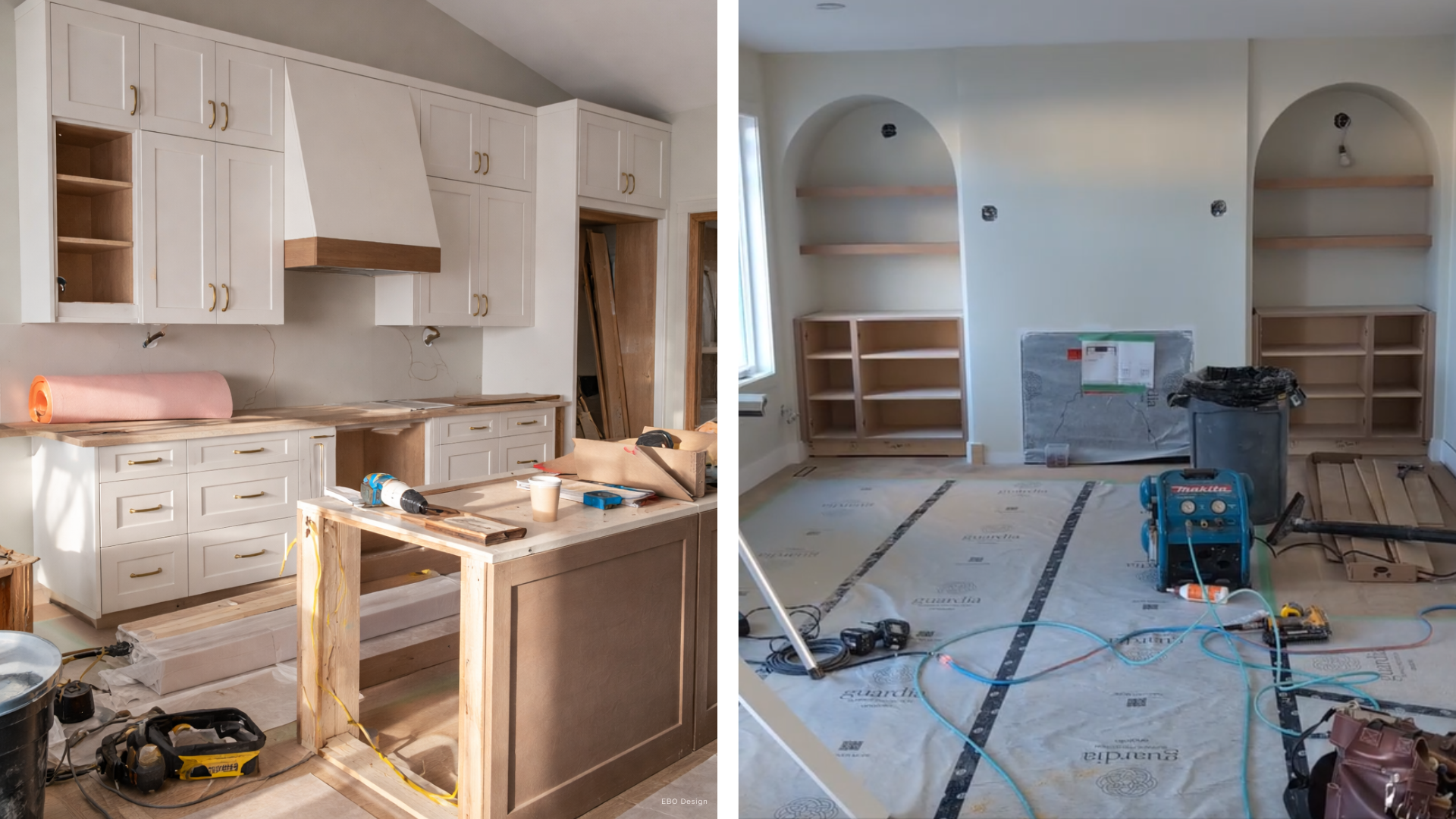
Find Out If You Will Work Well Together
Skill matters. Experience matters. But fit matters too.
Your contractor may be part of your life for months. They will be in your home, managing trades, solving problems, and making decisions that affect how the project moves forward. You want to know that their communication style, process, and expectations align with yours.
How do you like to communicate during a project?
Ask how your contractor typically communicates and how often you should expect updates.
Some contractors prefer texts. Others prefer phone calls, emails, scheduled check-ins, or project management software. You may get updates daily, weekly, at major milestones, or only when something needs your attention.
There is no “right” answer. The important thing is that the process is clear before work begins and that it works for both sides.
What kind of clients do you work best with?
This question can help you understand whether the contractor’s process is a good fit for your expectations.
For some contractors, they work best with highly involved homeowners who want to be part of every decision. Others are more comfortable with designer-led projects where many details are already decided before construction begins. Some have more experience with large-scale renovations with detailed plans, while others are better suited to smaller projects.
You want to make sure that this is a good fit for both of you.
How do you handle decisions when something unexpected comes up?
No matter how detailed the plan is, renovations still involve real homes, real materials, and real site conditions. When you have worked in renovations long enough, as we have, you stop being surprised when something unexpected comes up.
In a renovation, quick decisions are not always the right ones. Sometimes the best thing a contractor can do is pause, bring the right people into the conversation, and make sure the solution still supports the overall design, budget, and scope.
At the end of the day, there will be surprises. You need someone who stays calm, communicates clearly, and finds a solution.

How Full-Service Design Makes This Easier
If you are managing your renovation on your own, you need to ask a lot of questions because you are the one carrying the process. You are comparing contractors, interpreting quotes, tracking decisions, and confirming details.
That is a lot to manage, especially when you are already busy with work, family, and everyday life.
This is where full-service design can make a real difference.
At EBO Design, we work with trusted contractors who understand our process, our level of detail, and the standards we expect for our clients. We also know what to look for when reviewing the early details of a renovation.
We know when to give your quote a closer look. Vague language stands out to us because we know how easily it can create confusion later. We know when to flag an unrealistic allowance or an overly optimistic timeline, because we know how those details can have a big impact on your project.
You do not need to know every red flag, every technical detail, or every question to ask before your renovation begins. That’s what we’re here for.
Ready to move from overwhelmed to well-planned? Fill out our inquiry form to share the details of your vision.